Galgotias University Faces Meme Storm After Orion Robot Row at India AI Impact Summit 2026
Galgotias University Faces Meme Storm After Orion Robot Row at India AI Impact Summit 2026
What began as a technology showcase at the India AI Impact Summit 2026 quickly turned into an online storm for Galgotias University. The institution came under fire after it displayed a quadruped robotic dog named “Orion” and introduced it as an in‑house innovation linked to its Centre of Excellence in AI.
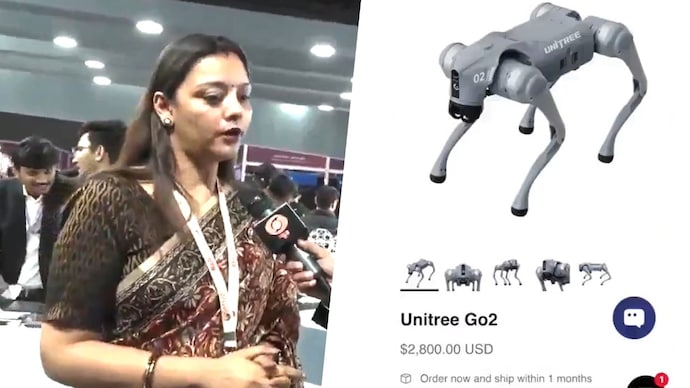
Within hours, social media users pointed out that Orion looked identical to Unitree Go2, a commercially available Chinese robotic dog sold to developers and research labs. The optics of presenting a rebadged imported platform at a national AI showcase triggered a wave of criticism, memes and questions about how Indian institutions talk about “indigenous” technology.
What Happened at the India AI Impact Summit
At the expo area of the India AI Impact Summit 2026, hosted at Bharat Mandapam in New Delhi, Galgotias University set up a stall to highlight its work in AI and robotics. One of the centrepieces was the four‑legged robot branded “Orion”, accompanied by branding that connected it to the university’s Centre of Excellence and AI investments.
Videos from the venue showed representatives explaining the robot’s capabilities and linking it to the university’s research ecosystem. To many visitors, the overall presentation created the impression that both the hardware and the solution stack were home‑grown, even though the robot’s physical design matched that of a well‑known foreign model.
Observers soon noted that the body shape, joint design and overall profile were consistent with the Unitree Go2 platform, which is widely used across the world as a generic robotics testbed. Side‑by‑side screenshots and product photos started circulating, reinforcing the perception that an off‑the‑shelf robot had been rebranded without clear disclosure of origin.
How the ‘Orion’ Robot Row Escalated
Once the resemblance to Unitree Go2 became widely discussed online, the debate moved beyond technical details and turned into a question of ethics and transparency. Commentators argued that there is nothing wrong with Indian universities using imported platforms for research, but passing them off as fully indigenous creations crosses a line.
The controversy deepened when users highlighted that Galgotias had also showcased a “soccer drone” at the summit, which some alleged was again a cosmetically modified foreign product. Together, these examples fed a narrative that the institution was over‑stating its contribution to the underlying hardware and presenting assembly or integration work as original invention.
On the ground, the issue reportedly escalated to the point where authorities asked the university to vacate its stall. When compliance was not immediate, officials are said to have cut power to the stall and eventually shut it down, underscoring how seriously concerns about misrepresentation were taken within the summit’s official ecosystem.
Why ‘GALGOTIA’ Started Trending
As the Orion story moved across X, Instagram and other platforms, creativity from meme pages turned the episode into a viral spectacle. The university’s name itself was turned into a backronym, and “GALGOTIA” became a shorthand for exaggerated technology claims.
One widely shared satirical post introduced a fictional project called the “Gravity Arresting Launch Grade Orbital Trapping Indigenous Apparatus” — conveniently abbreviated as “GALGOTIA”. The meme described this as a final‑year engineering project that could “catch returning rockets” and used real footage from a SpaceX booster landing to land the punchline.
The joke was clear: just as SpaceX rocket landings were being humorously rebranded as a college project, online users were accusing the university of rebranding foreign robotic hardware as its own. Variations of this theme, along with jokes about drones made of thermocol and cardboard and sarcastic takes from rival university communities, kept the hashtag alive and ensured the incident dominated conversation around the summit.
In a single meme, “GALGOTIA” shifted from a university name to a symbol for over‑claimed “indigenous” tech — a reminder that in the age of social media, any gap between reality and branding is quickly exposed.
University Response and Government Intervention
Representatives and faculty members from Galgotias later maintained that their statements were being misinterpreted, and that they had not explicitly claimed to have manufactured the robot dog from scratch. They pointed instead to broader investments in AI labs, applications and student projects, suggesting that the imported platform was part of a larger research environment.
However, the controversy had already raised sensitive questions about how “indigenous innovation” is showcased at high‑profile national events. The Ministry responsible for the summit intervened by having the stall vacated, sending an unmistakable signal that hardware origin and attribution must be clearly disclosed, especially on stages designed to promote Indian capabilities.
The episode has since sparked a wider debate in academic and startup circles. Many practitioners argue that the correct approach is to be explicit: universities can say they are building navigation, control, perception or application layers on top of foreign platforms, instead of implying that the entire robot is their own creation.
Lessons for India’s AI and Robotics Ecosystem
Beyond the memes and headlines, the Orion controversy underlines a structural issue in India’s emerging AI and robotics ecosystem: the temptation to conflate integration work with end‑to‑end invention. In fields where imported sensors, actuators and compute boards are common, clarity about what is genuinely designed and engineered locally becomes essential.
This clarity matters for at least three reasons: it builds trust with students and industry partners, it helps policymakers accurately assess capability gaps, and it protects the credibility of genuinely innovative players. In the long run, national branding around “Made in India” robotics and “physical AI” depends not just on what India builds, but on how honestly those achievements are communicated.
Indian Robotics Startups: Who Is Actually Building
In sharp contrast to the Galgotias episode, a growing set of Indian startups are quietly building serious robotics products across logistics, manufacturing, social impact and consumer segments. Many of these companies openly document which components are supplied globally and which subsystems are designed in India.
Read More : IndiaAI Mission CEO on India’s People Centric AI Vision
Examples of Indian Robotics and Automation Startups
- Addverb Technologies – Focuses on warehouse and factory automation, including autonomous mobile robots, shuttles and software for material handling and intralogistics.
- GreyOrange – Builds AI‑driven warehouse robots and sortation systems that power large e‑commerce and logistics operations in India and overseas.
- Svaya Robotics – Develops collaborative robots (cobots) and industrial automation solutions designed and manufactured in India for MSMEs and larger manufacturers.
- Genrobotics – Known for “Bandicoot” robots used to mechanise and ultimately eliminate manual scavenging, as well as exoskeletons for risky and physically demanding work.
- Miko – Produces companion robots for children with interactive AI, representing an Indian consumer‑facing robotics brand with global exports.
- Rapyuta‑style warehouse robotics players – Build fleets of mobile robots connected to cloud platforms for order picking, inventory movement and smart warehousing.
These startups, along with several smaller players in agricultural robots, cleaning robots, educational kits, and inspection drones, illustrate that India’s robotics story is not limited to demos at summits. They also highlight an important cultural difference: most of them are careful to explain their architecture, supply chain and IP, which helps them win trust with global partners and investors.
Government Push: Roadmap for Robotics and “Physical AI” in India
The Indian government has begun to treat robotics as a strategic pillar, not just a niche R&D topic. High‑level advisory groups and task forces are working on a national roadmap for robotics and “physical AI”, looking at everything from manufacturing capacity to safety, ethics and workforce skills.
A key theme in these discussions is using robotics as a force multiplier across priority sectors: manufacturing, logistics, healthcare, agriculture, defence, smart cities and sanitation. The goal is to move beyond pilots and lab demonstrations and ensure robots are deployed at scale where they solve real‑world problems for citizens and businesses.
Policy conversations also emphasise indigenisation of core technologies — motors, actuators, sensors, power electronics, high‑reliability embedded systems and robust AI stacks — rather than focusing only on end‑product assembly. This includes aligning public funding, standards, testing facilities and procurement so that universities, startups and larger companies can collaborate without needing to over‑claim their capabilities.
At the same time, various central and state initiatives are increasingly procuring robots for sanitation, health services and education, opening a market for credible domestic players. Done right, this demand can pull Indian startups up the value chain and encourage universities to form transparent partnerships instead of quietly rebadging imported platforms.
Read more : IG Drones: Powering India’s Indigenous Drone Revolution with AI and 5G Innovation


