India’s Startups Build Humanoids with Local Code Globally Sourced Hardware
India’s Startups Build Humanoids with Local Code, Globally Sourced Hardware
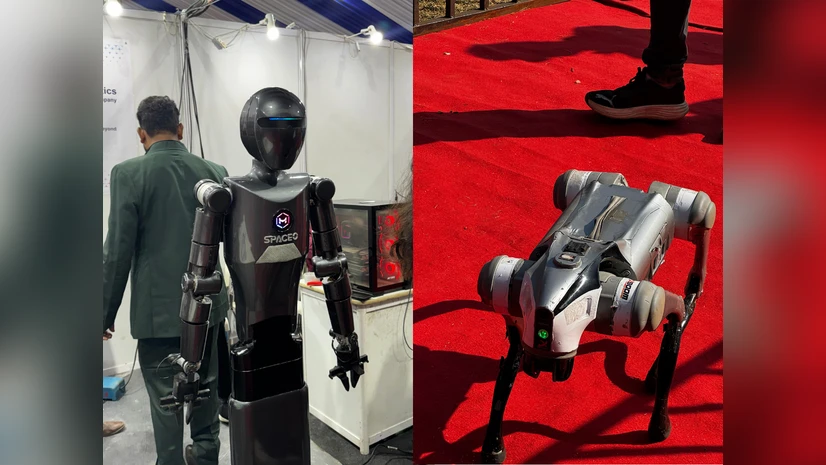
On a bright afternoon at IIT Bombay, a large tent buzzes with excitement. School students crowd around a gleaming lineup of supercars and superbikes, their polished frames reflecting the sun. Yet, it is not these luxury machines that truly capture their imagination.
This moment reflects a larger shift underway in India’s robotics ecosystem.
Local Intelligence, Global Hardware
Across the country, Indian robotics startups are quietly building advanced humanoid and quadruped robots powered by software developed entirely in-house. From motion planning and perception to artificial intelligence and decision-making systems, much of the “brain” behind these machines is being coded locally by Indian engineers.
However, when it comes to critical hardware components—such as high-precision motors, actuators, sensors, and advanced chips—startups still depend heavily on global supply chains. Components are sourced from countries including the US, Japan, South Korea, and parts of Europe, where manufacturing ecosystems for robotics hardware are far more mature.
This hybrid model—local software paired with globally sourced hardware—has become a pragmatic approach for Indian startups aiming to compete on the world stage without reinventing every physical component from scratch.
Beyond Demos and Delight
While robodogs delight audiences at exhibitions and campuses, their real value lies far beyond entertainment. Quadruped robots are increasingly being deployed for practical, high-impact use cases.
In security and surveillance, these robots can patrol sensitive areas continuously, navigating uneven terrain that traditional wheeled machines cannot handle. For industries such as oil and gas, mining, and power generation, quadrupeds can inspect hazardous zones, detect anomalies, and reduce risks to human workers.
Search-and-rescue operations are another critical area. In disaster-stricken environments—collapsed buildings, flooded zones, or areas exposed to toxic gases—robots can venture where human access is dangerous or impossible. Equipped with cameras, sensors, and communication tools, they provide vital real-time data to rescue teams.
The Rise of Humanoids
Alongside quadrupeds, Indian startups are also experimenting with humanoid robots designed to work in human-centric environments such as warehouses, factories, and eventually homes. These humanoids aim to replicate basic human movements—walking, lifting, and interacting with objects—making them suitable for tasks that require adaptability rather than rigid automation.
Though still in early stages, deployments are steadily increasing, driven by demand from logistics companies, research institutions, and defense organizations.
Challenges and the Road Ahead
Despite growing momentum, challenges remain. Hardware costs are high, supply chains can be unpredictable, and building robots that are both reliable and affordable is no easy task. There is also a need for stronger domestic manufacturing capabilities to reduce dependence on imports over time.
Yet, industry experts believe India’s strength in software and AI gives it a significant edge. As hardware ecosystems mature and government support for deep-tech startups increases, the gap is expected to narrow.
What began as a playful robodog charming students at a campus event is, in reality, a glimpse into India’s robotic future—one where intelligent machines, built on local innovation and global collaboration, steadily move from demonstrations to meaningful deployments.


