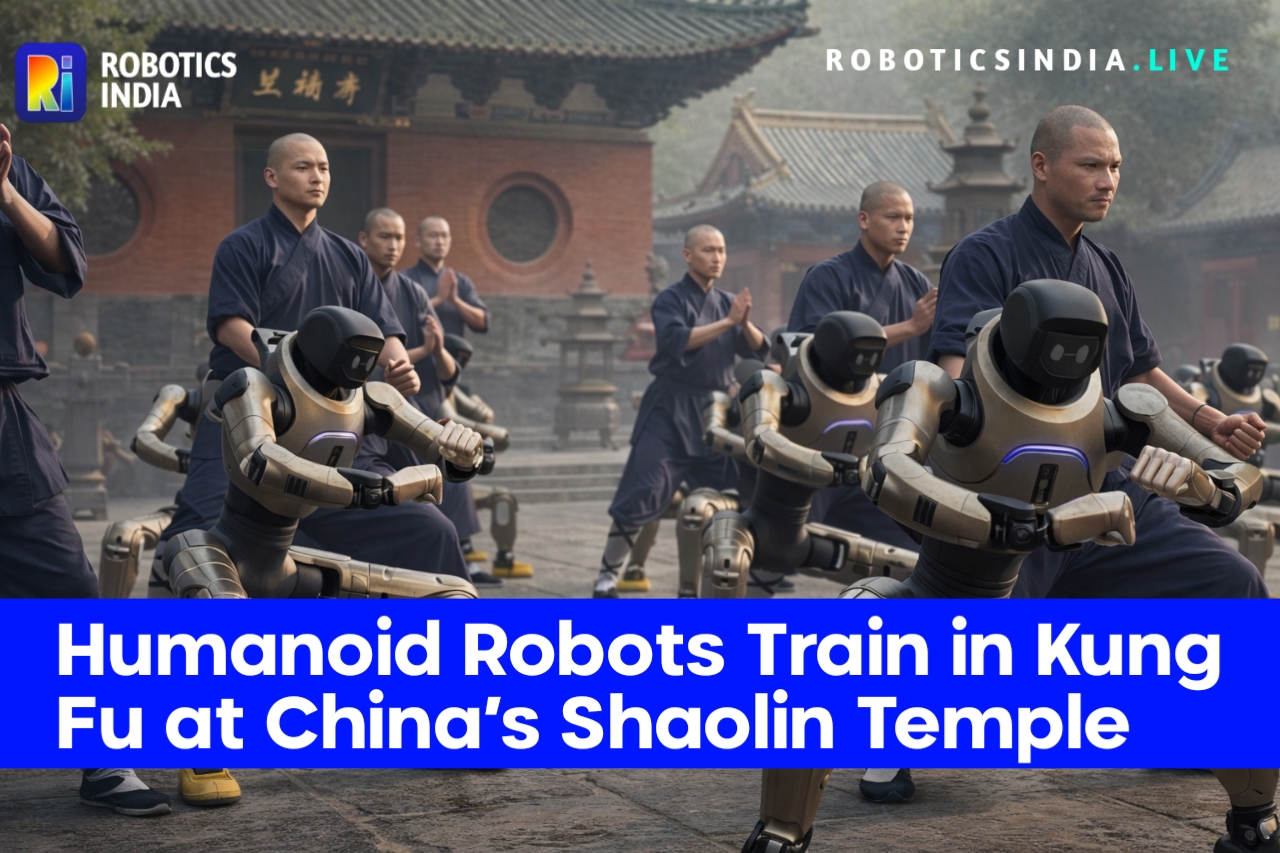
Humanoid Robots Train in Kung Fu at China’s Shaolin Temple
Humanoid Robots Train in Kung Fu at China’s Shaolin Temple: Tech Breakthrough or Marketing Stunt?
China has once again captured global attention by blending ancient tradition with cutting-edge technology. At the world-famous Shaolin Temple in Henan Province, humanoid robots were recently seen training alongside Shaolin monks, performing traditional Kung Fu movements including stances, punches, and coordinated routines.
The visuals quickly went viral online, showing white humanoid robots mirroring monks who have spent decades mastering martial arts. While the spectacle fascinated millions, it also sparked a serious debate within the tech community: is this merely a marketing showcase, or evidence that humanoid robots are becoming truly useful for industry?
What Really Happened at the Shaolin Temple?
The humanoid robots involved were developed by a Chinese robotics company specializing in general-purpose humanoid machines. These robots are designed to walk upright, maintain balance, observe their surroundings, and perform complex physical tasks.
At the Shaolin Temple, the robots executed pre-programmed Kung Fu routines under human supervision. Monks guided the timing and positioning of the movements, while the robots replicated techniques such as horse stances, arm strikes, and footwork.
Officials clarified that this was not a spiritual transformation of Shaolin traditions. Instead, the event was presented as a technological demonstration and cultural exchange, aimed at highlighting advances in robotics and artificial intelligence.
Also Read: ABU Robocon 2026 Theme Hong Kong China
The Technology Behind Robot Kung Fu
From an engineering perspective, Kung Fu movements are extremely challenging. They require precise balance, accurate joint coordination, and constant adjustment to maintain stability.
The humanoid robots are equipped with advanced vision systems, motion sensors, gyroscopes, and AI-driven control algorithms. These systems allow the robots to maintain posture, recover from small disturbances, and execute smooth full-body movements.
Although the routines were programmed rather than learned independently, they demonstrate the robots’ ability to handle complex physical coordination — a critical requirement for real-world industrial use.
Also Read: China Humanoid Robot Games
Marketing Spectacle or Genuine Innovation?
There is no denying that the Shaolin Temple provided a powerful visual backdrop. Robots practicing Kung Fu are far more attention-grabbing than robots performing factory work, making the event an effective marketing moment.
However, dismissing the demonstration as mere publicity would be misleading. The robots showcased are not conceptual models. Similar humanoid platforms are already being deployed in factories, warehouses, and public spaces across China.
The Kung Fu demonstration served as a stress test for balance, mobility, and coordination — capabilities essential for humanoid robots operating in environments designed for humans.
Why Humanoid Robots Matter for Industry
Traditional industrial robots excel at repetitive tasks in controlled environments. Humanoid robots, on the other hand, are designed to work in spaces built for people.
Their ability to walk, use tools, navigate stairs, and adapt to changing conditions makes them suitable for factories, logistics centers, hospitals, and public service roles without requiring major infrastructure changes.
The physical intelligence demonstrated through Kung Fu movements directly translates into practical industrial applications such as material handling, inspection, and collaborative work alongside humans.
Public Reaction and Global Attention
Public reaction to the Shaolin robot demonstration ranged from excitement to concern. While many praised China’s rapid technological progress, others expressed unease about humanoid robots becoming increasingly capable.
Despite the dramatic reactions, experts emphasize that these robots are not autonomous fighters. They operate within controlled parameters and follow predefined instructions.
Conclusion: A Signal of What’s Coming
The humanoid robot training at China’s Shaolin Temple is both a marketing showcase and a meaningful indicator of progress in robotics. While the demonstration was carefully staged, it highlighted real advancements in balance, coordination, and embodied artificial intelligence.
Humanoid robots are steadily moving from laboratories into real-world environments. Whether in factories, logistics hubs, or public spaces, their role in industry is expanding rapidly.
If robots can master the precision and balance required for Kung Fu, their ability to perform demanding industrial tasks may not be far behind.


