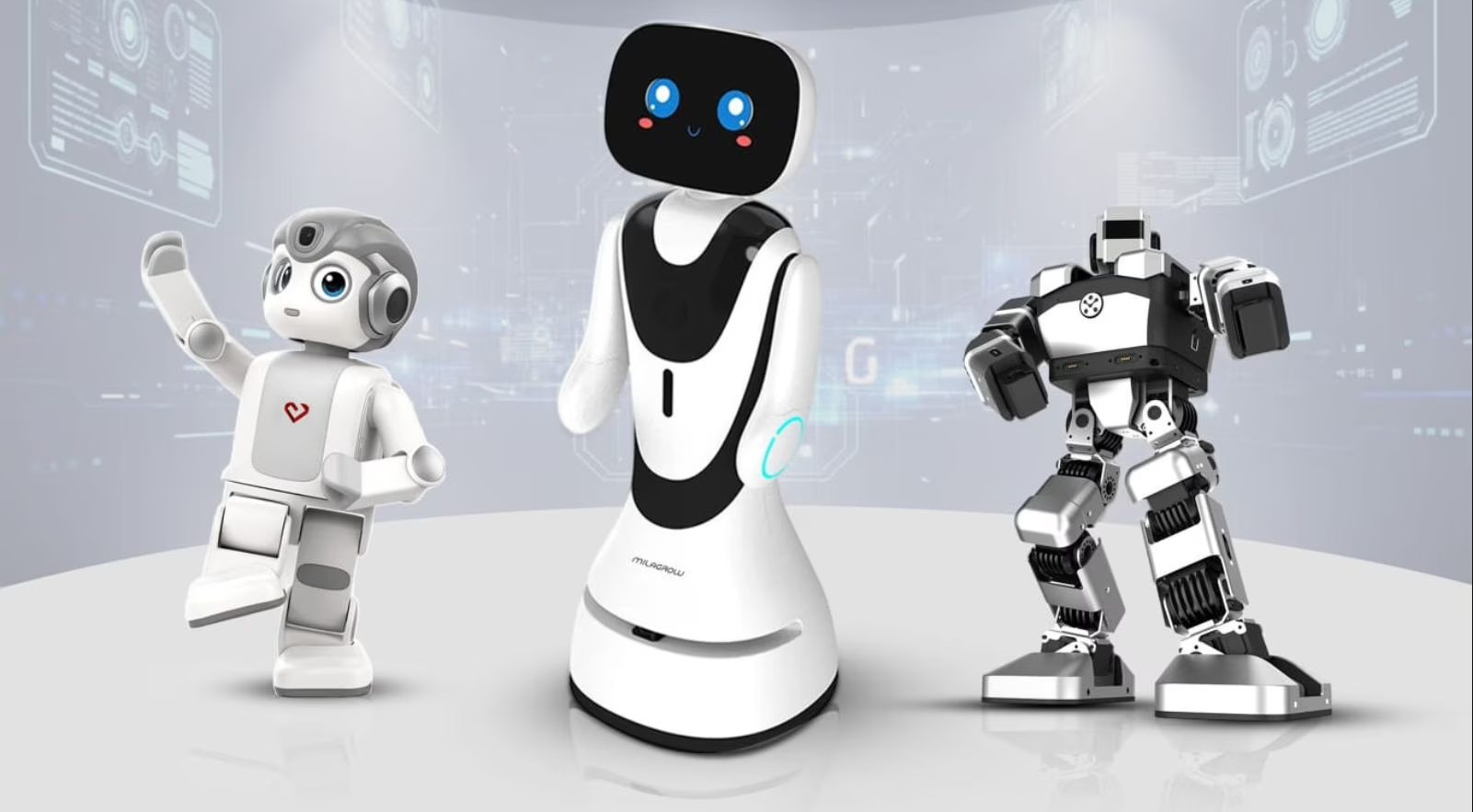
India’s Robot Masters: Local Code Drives World-Class Humanoids
India’s Robot Masters: Local Code Drives World-Class Humanoids
Overview
Indian robotics startups are showcasing advanced humanoid and quadruped robots, often nicknamed ‘robodogs,’ at events like IIT Bombay’s Techfest. While these companies excel at complex local programming and software development, they heavily rely on sourcing critical hardware components such as motors, actuators, and sensors from international markets, primarily China and Switzerland. Despite these supply chain challenges, the deployment of industrial robots in India has seen significant growth over the last decade, though humanoids remain a niche category primarily in the research and development phase.
India’s Robotics Ambition: Local Code, Global Parts Fueling Innovation
At IIT Bombay’s Techfest, a different kind of marvel captured attention, drawing crowds away from supercars. Quadruped robots, affectionately termed ‘robodogs,’ demonstrated impressive agility, weaving through the audience, jumping, and waving. Beyond entertainment, these four-legged machines, alongside humanoids, are finding crucial roles in security, surveillance, exploration, and search-and-rescue missions, especially in hazardous environments.
The Core Issue: Sourcing Critical Hardware
While Indian startups are demonstrating remarkable prowess in software development and programming complex robotic functions, a significant dependency remains on global supply chains for hardware. Companies like XBoom, based in Bengaluru, acknowledge that sophisticated components such as actuators, motors, batteries, and thrusters are largely sourced from countries like China. For high-precision sensors, Switzerland remains a primary supplier. This reliance is partly due to the availability of multiple software development kits (SDKs) from international hardware providers, which are easily customizable.
Humanoids: A Niche Market with Potential
Humanoid robots, designed to mimic human form and movement, are still considered a niche category in the global market. Reports suggest that widespread commercial deployments are still some time away, with much of the development concentrated at the research and development stage. Companies often build prototypes for trial applications rather than mass production.
Indian Startups Forge Ahead
This hasn’t deterred Indian startups. Pune-based Muks Robotics, for instance, is developing multiple humanoid models, entirely bootstrapped. They focus on building most of the robot locally, importing only essential parts like motors. Their humanoid model, Spaceo M1, boasts an arm payload capacity of 1 kg per arm and is being tested for luggage carrying, with the robot capable of transporting a total of 50 kg on its trolley. The large language model (LLM) powering the humanoid also runs locally, leveraging open-source code.
Industrial Robot Deployment Surges
In contrast to the niche humanoid sector, the deployment of industrial robots in India has experienced substantial growth. In 2024, India saw the deployment of 9,123 industrial robots, an increase from 8,510 the previous year. Over the last decade, this number has more than quadrupled from 2,126. This growth underscores a maturing industrial automation landscape in the country, although it still lags behind the approximately 34,000 deployments in the US in 2024.
Financial Implications
The reliance on imported hardware presents a significant cost factor and potential supply chain vulnerability for Indian robotics firms. However, the strong growth in industrial robot adoption indicates a robust domestic market demand. For investors, this presents opportunities in companies excelling in software and AI for robotics, while also highlighting the potential for growth in domestic hardware manufacturing if the R&D gap can be addressed.
Future Outlook
India’s strength in software and AI development positions its startups well in the global robotics race, particularly in specialized applications. Bridging the gap in hardware manufacturing through increased R&D and domestic production could unlock India’s full potential as a global robotics hub. The continued rise in industrial automation suggests a positive trajectory for the sector.
Impact
This development has a moderate impact on the Indian stock market, particularly for technology and manufacturing-focused companies. It signals innovation and potential growth in a key future sector. A rating of 7 out of 10 reflects its significance for investors interested in India’s technological advancement.


